
Loose Skin After Weight Loss: Why It Happens and What Actually Helps
Medically reviewed by Jane Yoo, MD, board-certified dermatologist and Mohs surgeon.
The short answer: loose skin after weight loss happens when your skin cannot shrink as fast as your body does. Mild to moderate looseness can often be improved without surgery. Large folds of excess skin usually cannot, and a plastic surgery consultation is the honest next step.
Why skin stays loose
Skin is elastic, but only up to a point. Over time, stretched skin loses collagen and elastin, the proteins that let it spring back. When weight comes off, the fat underneath shrinks but the skin may not follow.
Four things decide how much looseness you end up with:
- How much weight you lost. More weight lost means more stretched skin to retract.
- How fast you lost it. Slower loss gives skin more time to adapt.
- How long you carried the weight. Longer stretching tends to damage collagen more.
- Your age, genetics, sun exposure and smoking history. All affect collagen quality.
Loose skin is common with any large weight loss, including medication, surgery and lifestyle change. It is not a sign that something went wrong.
Where it shows up
The lower abdomen, upper arms, inner thighs, breasts, buttocks, neck and face. The face and neck often show change first; see my guide to Ozempic face.
Is it loose skin or leftover fat?
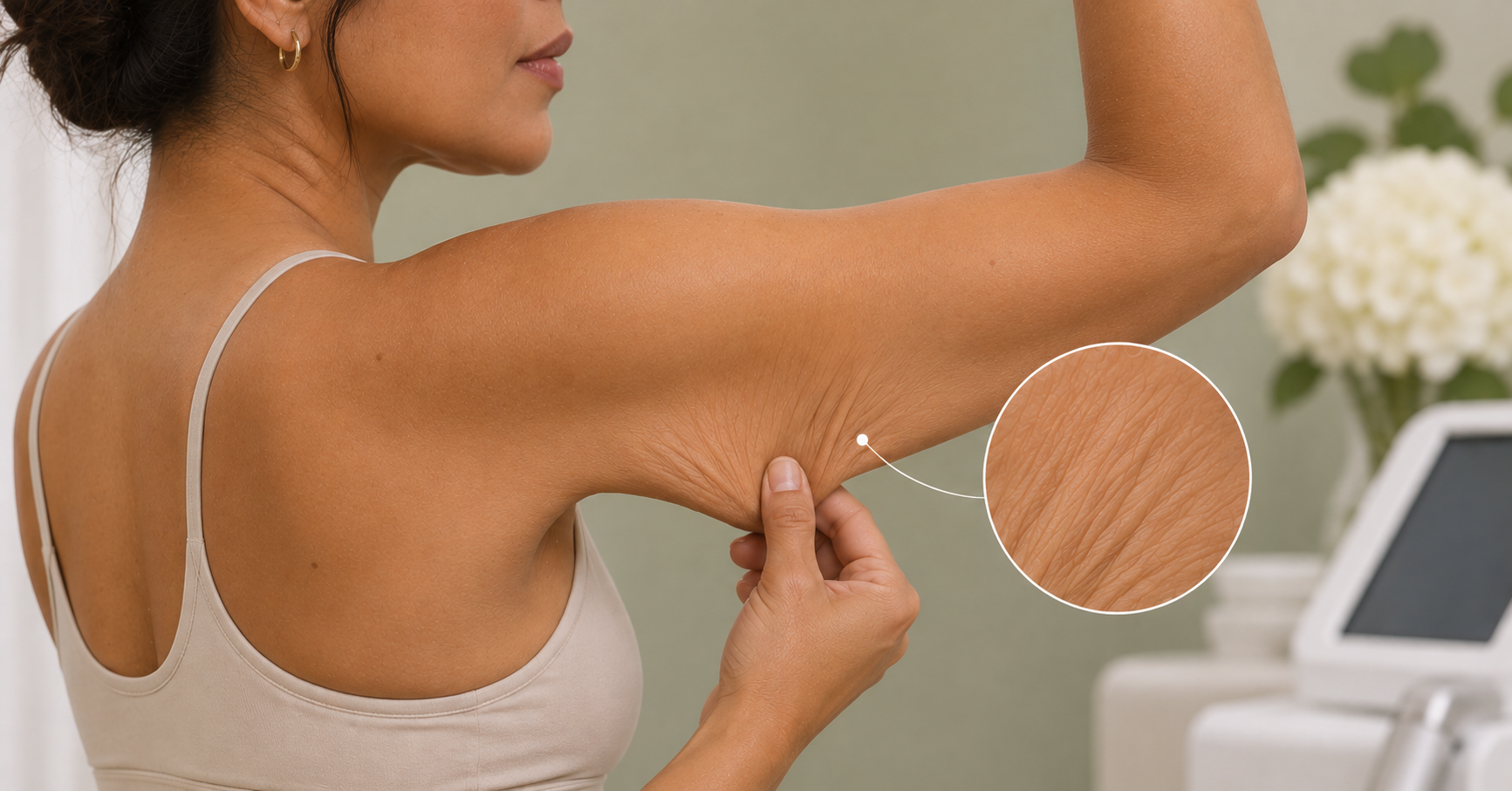
A simple check: pinch the area. If the pinched layer is thin and papery, it is mostly skin. If it is thick and soft, it may include fat that is still shrinking. Your answer changes the plan, because treatments that tighten skin will not remove fat, and fat loss will not fix stretched skin.
What helps, by severity
|
Severity |
What it looks like |
Options |
|---|---|---|
|
Mild |
Slight crepiness or softness, no hanging folds |
Strength training, sun protection, retinoids, skin-quality treatments |
|
Mild to moderate |
Visible looseness that still snaps back partly |
Radiofrequency (such as Everesse), RF microneedling, fractional laser |
|
Moderate to severe |
Hanging folds or overhang |
Surgical body contouring after a plastic surgery consultation |
Non-surgical options I use and discuss
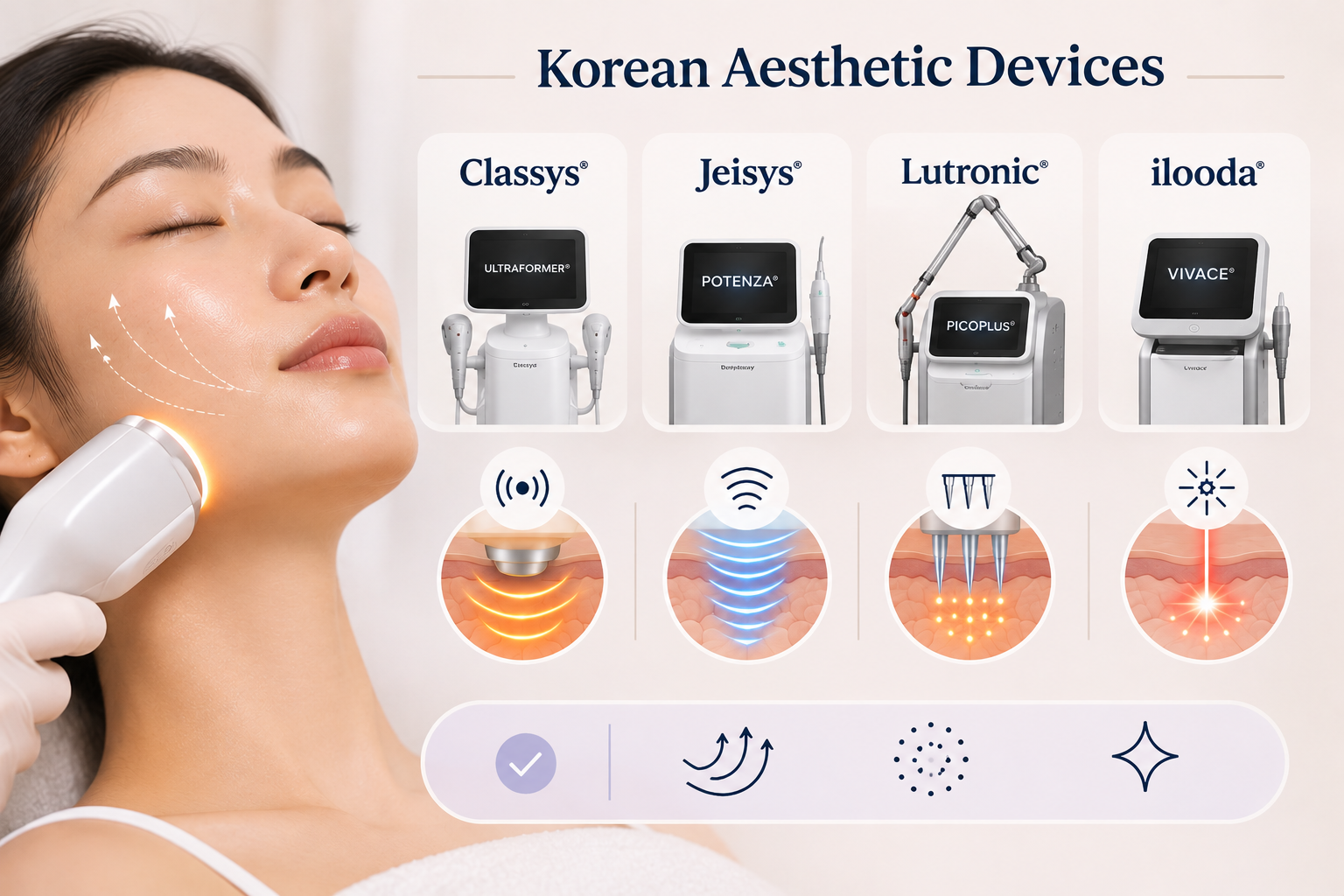
- Radiofrequency tightening. Heats the deeper skin layers to trigger collagen remodeling. I brought in Everesse for early to moderate laxity, including the collagen loss I see in patients losing weight on GLP-1 medications. See Everesse for GLP-1 skin changes.
- RF microneedling. Combines microneedling with radiofrequency to improve texture, crepiness and firmness.
- Fractional laser. Improves skin quality and fine texture; see Fraxel Dual in NYC.
- Topicals. Prescription retinoids can support collagen on the face, neck and chest. Most body “tightening” creams do little.
What does not help much
- Firming creams that promise to “lift” skin
- Body wraps and “detox” treatments
- Large doses of collagen supplements, for which evidence is limited
Build muscle underneath
Weight loss, including on GLP-1 medications, takes some muscle along with fat. A 2026 meta-analysis found that lean mass made up about a quarter to a little over a third of weight lost with these medications, similar to lifestyle weight loss. Resistance training and adequate protein, as your care team advises, help preserve muscle, which fills out the contour beneath your skin.
When to consider surgery
If you have hanging folds, skin rashes or irritation in the folds, or you do not see improvement after your weight has been stable for several months, ask your doctor about a body contouring consultation. I will tell you honestly if what you have is beyond what non-surgical treatment can do, and I can refer you.
When to start treatment
Treatments that build collagen can begin while you are still losing weight. Decisions about removing or tightening large amounts of skin are best made once your weight has settled.
Frequently asked questions
Will loose skin go away on its own? Sometimes it improves partly over months, but not always. See Does Skin Tighten Naturally After Weight Loss?.
Can non-surgical treatments get rid of hanging skin? No. They can improve mild to moderate laxity, not large folds.
Is loose skin worse on GLP-1 medications? The look depends on how much and how quickly weight comes off, not the medication itself.
How many treatments will I need? Radiofrequency and similar treatments usually require a series. I will give you a realistic estimate after examining you.
Want an honest assessment of what treatment can and cannot do for you? Book a consultation with Dr. Yoo in Midtown Manhattan.






Leave A Comment