The Mohs Step-by-Step Process
The Mohs surgery procedure seems simple: the surgeon removes the cancer, carefully checks to be sure the he or she got it all, then repairs the wound. American College of Mohs Surgery members, however, train in and practice the complex nuances of this process for years so they are prepared to handle any situation they may encounter. This page describes the steps they follow for each Mohs surgical procedure.
Mohs skin cancer surgery is the most effective treatment for most types of skin cancer.
Step 1
The roots of a skin cancer may extend beyond the visible portion of the tumor. If these roots are not removed, the cancer will recur. A surgery starts with the American College of Mohs Surgery (ACMS) specialist examining the visible lesion and planning what tissue to remove. The patient then receives local anesthesia, and the Mohs surgery begins.

Step 2
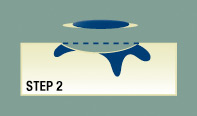
The surgeon removes the visible portion of the tumor using careful surgical techniques.
Step 3
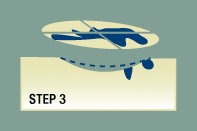
The ACMS surgeon next removes a deeper layer of skin and divides it into sections. With the help of technicians, the surgeon then color-codes each of these sections with dyes and makes reference marks on the skin to show the source of the sections. A map of the surgical site is then drawn to track exactly where each small portion of tissue originated.
Step 4
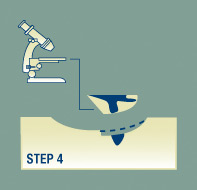
In a laboratory, the surgeon uses a microscope to examine the undersurface and edges of each section of tissue in search of evidence of remaining cancer.
Step 5
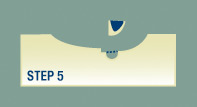
If the surgeon finds cancer cells under the microscope, he or she marks their location on the “map” and returns to the patient to remove another deeper layer of skin — but only from precisely where the cancer cells originated. This method ensures that the Mohs surgery results in the smallest scar possible.
Step 6
The removal process stops when there is no longer any evidence of cancer in the surgical site. Because Mohs surgery removes only tissue containing cancer, it ensures that the maximum amount of healthy tissue is kept intact. At this point, the surgeon discusses reconstruction options, should they be required, and then post-operative care. Mohs surgery recovery tends to be easily manageable because of the use of local anesthesia and the careful surgical techniques.
Guided Aftercare for Mohs Surgery: Watch Our Informative Video Below!
Guided Aftercare for Mohs Surgery: Watch Our Informative Video Below!
Frequently Asked Questions About Mohs Surgery
What is Mohs surgery?
Mohs micrographic surgery is a precise surgical technique for removing skin cancer layer by layer. Each layer is examined under a microscope immediately after removal, and the surgeon continues removing tissue only where cancer cells are still detected. This preserves the maximum amount of healthy skin while achieving the highest cure rate of any skin cancer treatment — up to 99% for primary basal cell carcinoma.
Who is a good candidate for Mohs surgery?
Mohs surgery is recommended for skin cancers in cosmetically or functionally sensitive areas such as the face, ears, nose, lips, eyelids, hands, feet, and genitals. It is also recommended for recurrent tumors, large tumors, cancers with aggressive or ill-defined borders, and immunocompromised patients. It is most commonly used for basal cell carcinoma and squamous cell carcinoma.
How long does Mohs surgery take?
Patients should plan for a full day. Each stage involves removing tissue, processing it in the lab, and reading slides, which takes about 1–2 hours per stage. Most cases are completed in 1–3 stages, but complex or large tumors may require more. Reconstruction is planned after clear margins are confirmed.
What is Dr. Yoo’s training in Mohs surgery?
Dr. Jane Yoo completed a dedicated Mohs surgery fellowship at Yale School of Medicine and holds board certification through the American College of Mohs Surgery (FACMS). She performs Mohs surgery at her Midtown Manhattan practice for patients referred from throughout the New York metropolitan area.
Is Mohs surgery covered by insurance?
Mohs surgery for medically indicated skin cancers is typically covered by Medicare and most major insurance plans. Coverage depends on the cancer type, location, and individual plan. Reconstructive procedures performed the same day may also be covered. Contact the office at 646-844-0424 to verify your specific coverage.