
Best Sunscreen for Melasma: What a Dermatologist Looks For (2026 Update)
Medically reviewed by Jane Yoo, MD, board-certified dermatologist and Mohs surgeon.
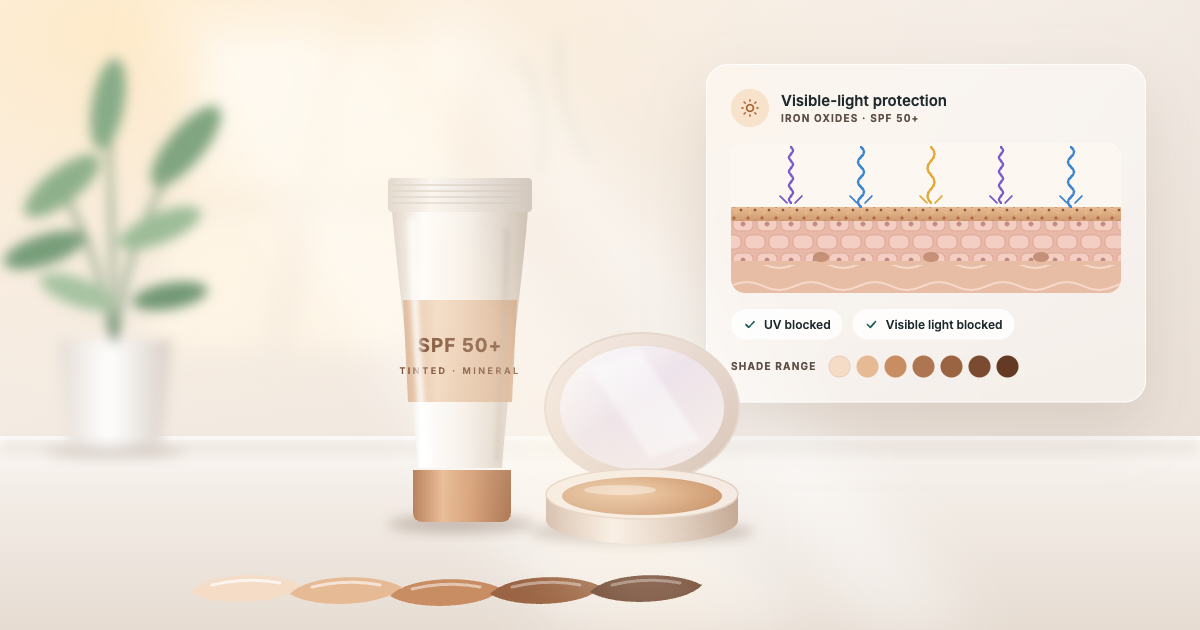
The short answer: the best sunscreen for melasma is a broad-spectrum SPF 50+ that is tinted with iron oxides. Melasma is driven by visible light as well as UV, and most clear sunscreens block only UV.
Why sunscreen matters more for melasma than almost any other condition
Melasma is a pigment disorder in which the pigment-making cells in your skin are unusually reactive. Ultraviolet light is the best-known trigger, but visible light (including the blue-violet light from the sun and from screens) and heat can also darken it. That is why melasma so often returns after a good treatment: the trigger is still there.
In my Midtown Manhattan practice, I tell patients that no cream, pill or laser will hold if daily photoprotection isn’t in place first. Sunscreen is not an add-on to melasma treatment. It is the foundation.
What to look for in a melasma sunscreen
- Iron oxides (a tint). This is the single biggest upgrade. Iron oxides block visible light, which standard UV filters do not. If a sunscreen is not tinted, it is leaving a known melasma trigger unaddressed.
- SPF 50 or higher, broad spectrum. Broad spectrum means it covers UVA and UVB. Higher SPF gives more margin for the amount most people actually apply, which is usually less than the amount used in testing.
- A filter type you will actually wear. Mineral filters (zinc oxide, titanium dioxide) sit on the skin and are often gentler on reactive, melasma-prone skin. Well-formulated chemical filters are also effective. The best sunscreen is the one you apply generously and reapply.
- A shade that works for your skin tone. Melasma is common in medium to deep skin tones, where white cast is the main reason people stop wearing mineral sunscreen. Look for a tint range that matches you.
- A format that makes reapplication easy. Sticks and cushion formats are easier to reapply over makeup than lotions.
Mineral, chemical or hybrid: a quick comparison
| Type | Strengths |
Trade-offs for melasma |
|---|---|---|
|
Mineral (zinc oxide, titanium dioxide) |
Gentle, reflects and scatters light, good for sensitive skin |
Can leave a white cast unless tinted |
|
Chemical (organic filters) |
Lightweight, no white cast |
Not tinted unless iron oxides are added; some people find them irritating |
|
Hybrid |
Balances texture and protection |
Check that it is tinted with iron oxides |
What’s new: bemotrizinol is now allowed in US sunscreens
In June 2026, the FDA finalized an order adding bemotrizinol (BEMT) to the list of permitted sunscreen ingredients. It is the first new sunscreen filter added in the US in more than 20 years. The order took effect on August 9, 2026, allows concentrations up to 6%, and covers adults and children 6 months and older.
Bemotrizinol is a broad-spectrum filter that is highly photostable, meaning it breaks down more slowly in sunlight than many older filters. It has been used for years in Europe, Australia and parts of Asia, which is why many of my patients who travel already know it.
Two things matter for melasma. First, better UV filters can make lighter, more wearable textures easier to formulate. Second, bemotrizinol does not block visible light. A bemotrizinol sunscreen for melasma should still contain iron oxides. Formulators are only now bringing BEMT products to market, so check ingredient labels for “bemotrizinol” or “BEMT.”
For the full picture, see my bemotrizinol guide and my comparison of UV filters. Iscotrizinol, another filter you may see abroad, is not approved in the US; I explain why on my iscotrizinol page.
How to apply sunscreen when you have melasma
- Use about a quarter teaspoon for the face alone, and add neck and ears.
- Apply it every morning, even on cloudy days and even if you work indoors near windows.
- Reapply about every two hours when outdoors, and after sweating or swimming.
- Add a wide-brimmed hat and sunglasses. Physical shade reduces heat exposure, which can also aggravate melasma.
- Put sunscreen on last in your skincare routine, after treatments such as tranexamic acid or topical lighteners prescribed for you.
Sunscreen is necessary, but it is rarely sufficient
Most patients also need a treatment plan: prescription topicals, oral options, or in-office treatment. Energy-based treatments for melasma must be chosen carefully, because heat can make melasma worse. In my practice I use a low-energy approach with pico laser for appropriate patients. You can read how I decide in Pico Laser for Melasma and Sun Spots.
My recommended sunscreens
My first two picks are tinted with iron oxides, so they also block visible light. If you choose an untinted one, wear a tinted product or iron-oxide foundation over it.
Best tinted: Tatcha The Silk Sunscreen SPF 50. Mineral (10% zinc oxide) with iron oxides for a sheer tint, plus niacinamide and hyaluronic acid.
Best overall: EltaMD UV Clear Tinted SPF 46. The dermatologist-office standard, with 5% niacinamide. Choose Tinted or Deep Tinted for melasma.
Best mineral, no white cast: Innisfree Daily UV Defense Mineral SPF 45. Micronized zinc that blends into a wide range of skin tones.
Best lightweight for deeper skin tones: Supergoop Unseen Sunscreen SPF 40. A clear, matte gel that leaves no cast and works as a makeup primer.
Best for sensitive skin: La Roche-Posay Anthelios UV Air SPF 50. A gentle daily formula with thermal spring water and niacinamide.
Frequently asked questions
Do I need tinted sunscreen if I already wear foundation? Yes, unless your foundation is sunscreen-tested and applied thickly. Most foundations are applied too thinly to count as sun protection and often lack iron oxides.
Is mineral sunscreen better than chemical for melasma? Neither is automatically better. What matters most is iron oxides, SPF 50 or higher, and consistent use.
Can sunscreen alone clear melasma? Sometimes it fades with strict protection, but most people need treatment as well. Sunscreen prevents relapse and protects your results.
Is the new bemotrizinol filter safe for melasma-prone skin? FDA considers it generally recognized as safe and effective at concentrations up to 6%. It has a long record of use overseas.
How do I know if a sunscreen blocks visible light? Check the ingredient list for iron oxides (listed as CI 77491, 77492 or 77499) and look for a tint.
Want a plan built around your skin tone and triggers? Book a consultation with Dr. Yoo in Midtown Manhattan.





Leave A Comment