
Microneedling vs. RF Microneedling: What Is the Difference?
Medically reviewed by Jane Yoo, MD, MPP, dermatologist and Mohs surgeon. Last reviewed 11/06/26
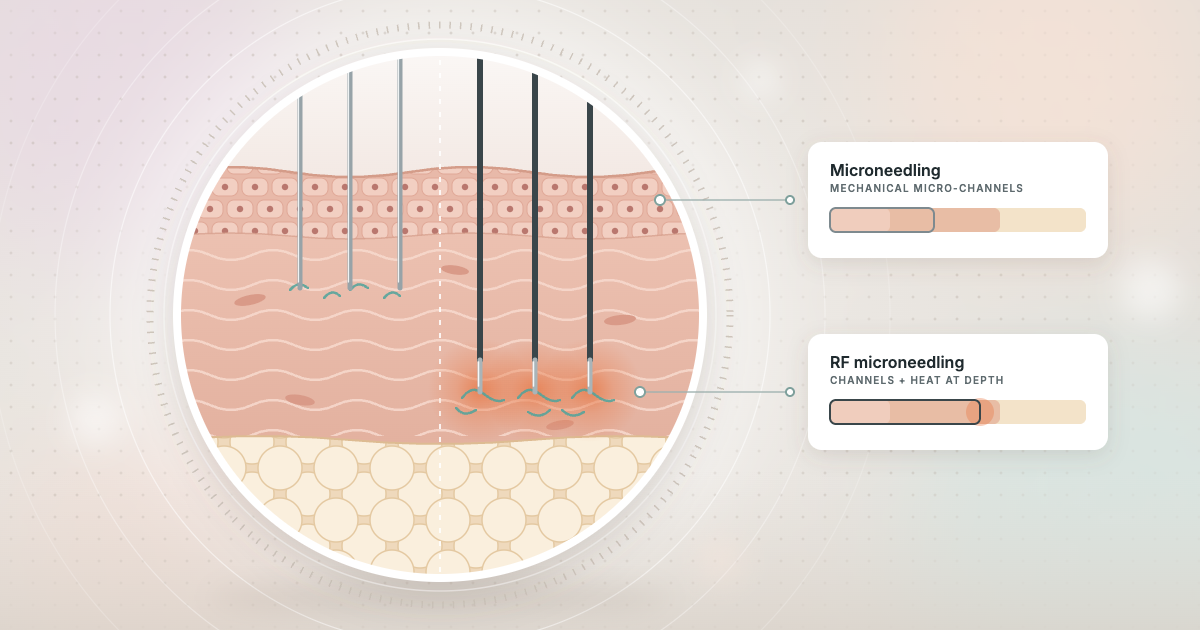
The short answer: Standard microneedling makes tiny punctures in the skin to trigger repair and collagen building. RF microneedling does the same and adds radiofrequency energy delivered through the needles, which heats deeper layers. That added heat generally makes RF microneedling better suited to laxity and deeper scarring, and it usually comes with more downtime. Standard microneedling is gentler and often a good choice for mild texture and tone.
How standard microneedling works
A device with fine needles creates tiny channels in the skin. The body treats these as minor injuries and responds by producing collagen and elastin. The channels can also improve how well topical products reach the skin, depending on what is used and who is performing the treatment.
How RF microneedling works
The needles are insulated or partly insulated so radiofrequency energy heats tissue at the needle tip depth, below the surface. Heating tissue can tighten and remodel collagen more strongly than needles alone.
| Standard microneedling | RF microneedling | |
|---|---|---|
|
Mechanism |
Mechanical injury |
Mechanical injury plus radiofrequency heat |
|
Typical goals |
Mild texture, tone, mild scarring |
Acne scars, laxity, pore appearance, texture |
|
Depth of effect |
Mostly mechanical depth |
Heat can reach deeper layers |
|
Sensation |
Usually milder with numbing |
Often more intense. Numbing is standard |
|
Downtime |
Usually shorter |
Usually longer, with redness and swelling for some days |
|
Session count |
Often several |
Often several, fewer for some goals |
|
Melasma and darker skin tones |
Used carefully |
Heat can trigger pigment. Needs careful settings and selection |
Which is better for what
- Mild texture and tone: standard microneedling is often enough
- Acne scars: both are used. Deeper scars often benefit from RF or other approaches
- Mild skin laxity: RF microneedling may be more suitable
- Enlarged pores: both may help, depending on the cause
- Melasma or a tendency to dark spots: choose very carefully, because heat and inflammation can darken skin
Safety and who should wait
- Active acne, infection or cold sores in the treatment area
- Certain skin conditions and medicines, including recent isotretinoin. Always tell your dermatologist
- Pregnancy or breastfeeding. Ask first
- A tendency to keloid scars
- Recent sun exposure or tanning
What to expect
- Numbing cream is applied to the face.
- The device is passed over the skin in sections.
- Your skin will look red, like a sunburn, for a period of time, then peel or flake.
- Gentle skincare and sunscreen are important afterward.
Your practitioner can give you a realistic recovery timeline for the device and settings used.
When another treatment may be better
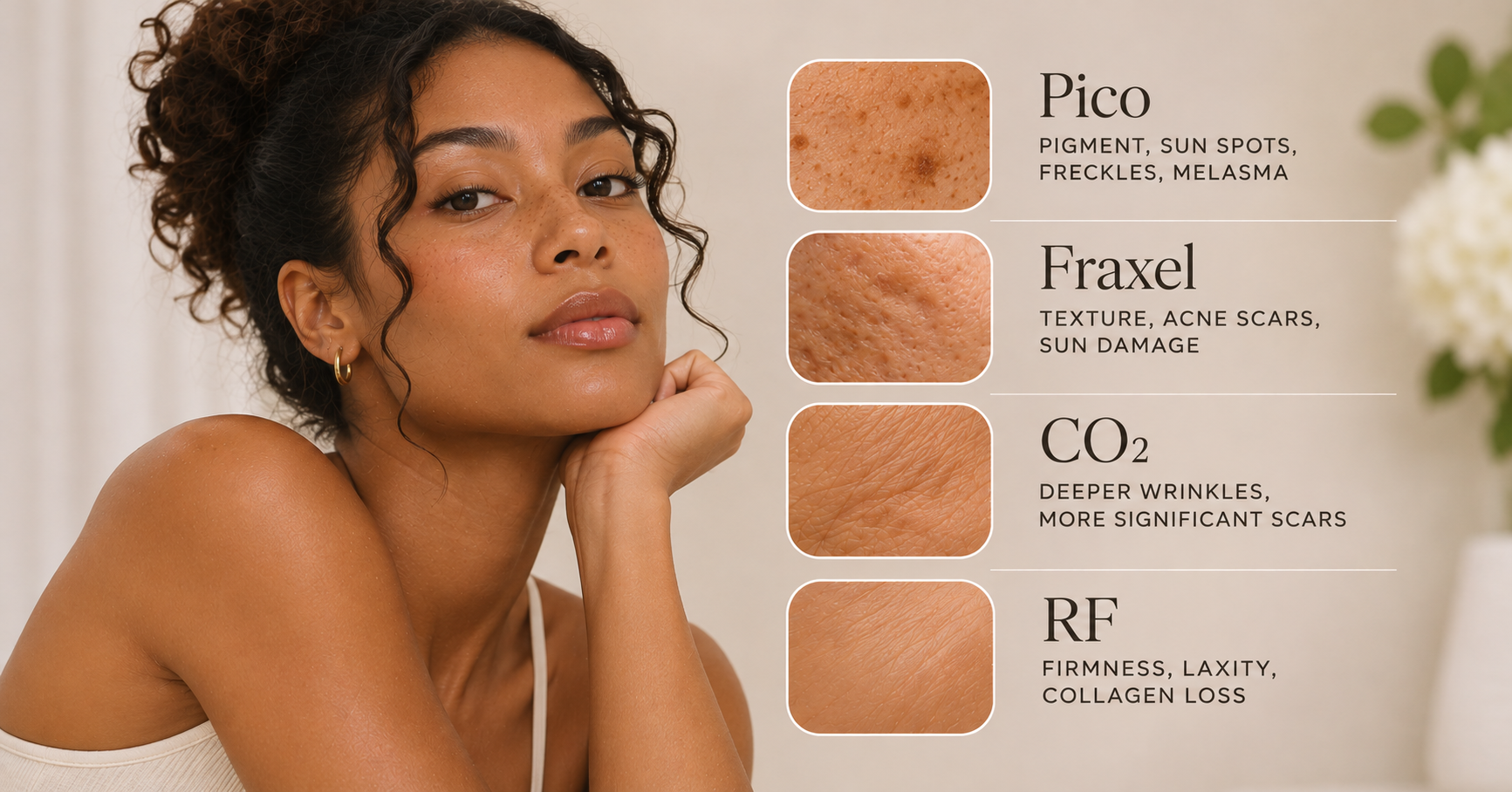
For deeper scarring, significant laxity or more dramatic resurfacing, other options such as fractional lasers or CO2 laser may suit you better.
Frequently asked questions
Is RF microneedling better than regular microneedling? It depends on your goals. It is stronger and tends to have more downtime.
Does it hurt? Numbing cream helps. RF treatments are often more intense.
How many sessions do I need? It depends on the concern and the device. Your dermatologist will advise.
Is it safe for darker skin? It can be, with careful device selection and settings. Heat can cause pigment changes, so choose an experienced practitioner.
Can I do microneedling at home? Home rollers are shallow. Deeper or in-office treatments should be done by a trained professional to reduce risks of infection and scarring.
Call to action: Book a consultation to find out which approach suits your skin.





Leave A Comment