
Fraxel Dual in NYC: What the 1550 nm and 1927 nm Wavelengths Each Treat
Your Medically reviewed by Jane Yoo, MD, board-certified dermatologist and Mohs surgeon.
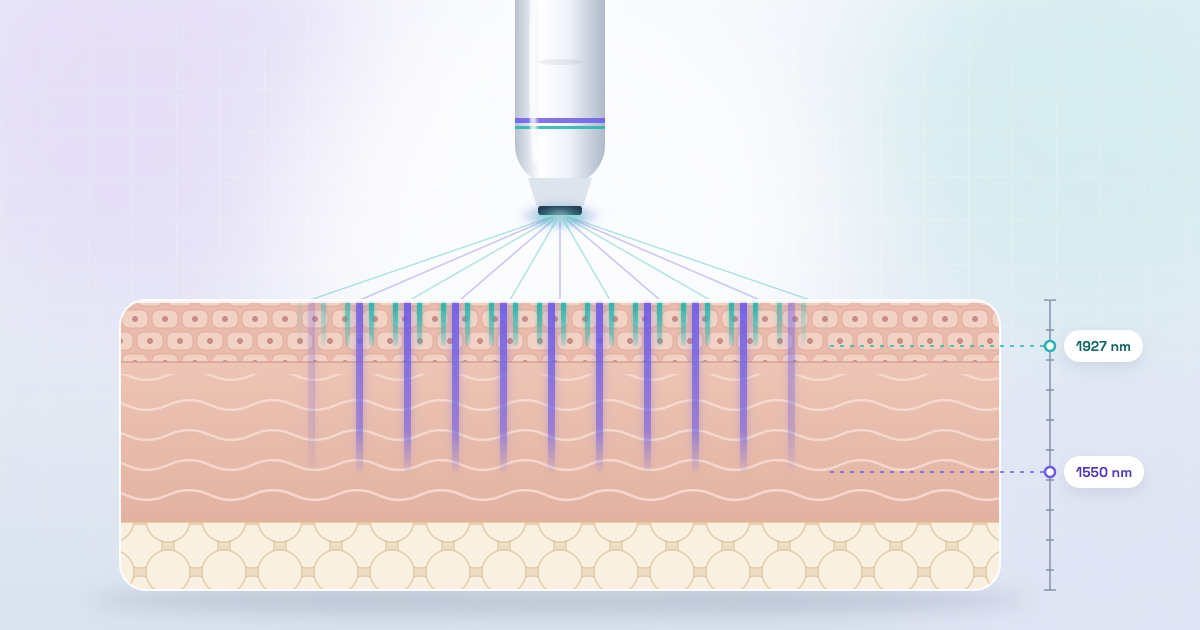
The short answer: Fraxel Dual combines two lasers in one system. The 1550 nm wavelength works deeper to improve texture, scars and fine lines. The 1927 nm wavelength works at the surface to treat sun spots and sun damage. Because my system has both, I can choose one wavelength or combine them based on what your skin needs.
How Fraxel works
Fraxel is a non-ablative fractional laser. Instead of treating your whole skin surface at once, it creates thousands of microscopic columns of controlled treatment, with healthy untreated skin between them. That untreated skin helps you heal faster than you would after older, fully resurfacing lasers, while the treated columns trigger your skin’s own renewal and collagen response. Goes Here
The two wavelengths, side by side
|
1550 nm (erbium) |
1927 nm (thulium) |
|
|---|---|---|
|
Depth |
Deeper, reaches the dermis |
Shallower, targets the top layers |
|
Best for |
Fine lines, uneven texture, acne scars, overall skin quality |
Brown spots, sun damage, uneven tone, rough surface texture |
|
How I think of it |
Rebuilds structure |
Clears the surface |
|
Typical recovery look |
Pink, mild swelling for a day or two |
Tan or bronzed look that gradually flakes over several days |
Who is a good candidate
- You have sun damage, brown spots or uneven tone and want visible improvement without the longer recovery of a more aggressive laser.
- You have acne scars or textural changes you want to soften gradually.
- You want to improve skin quality on the face, neck or chest.
Fraxel can be used on a range of skin tones, but darker skin is more prone to post-inflammatory darkening, so settings must be conservative and treatment planned carefully. I assess this at your consultation. I use 3D VISIA imaging to look at pigment, texture and sun damage beneath the surface, which helps me decide where each wavelength belongs.
Who should wait or choose something else
- Recent tan or sun exposure. Treatment is best timed when your skin is not tanned.
- Active infection or an active cold sore outbreak. If you have a history of cold sores, tell me; preventive medication may be recommended.
- Isotretinoin use within the recent past. Tell me about all medications.
- Deep, stubborn melasma, which often needs a gentler approach. See Pico Laser for Melasma and Sun Spots.
What to expect: step by step
- Consultation and imaging. We review your goals, skin history and VISIA images, and I recommend a wavelength plan.
- Numbing. A topical numbing cream is applied before treatment.
- Treatment. The laser passes take a short time. Most patients describe heat and a prickling sensation.
- Right after. Your face will look pink or sunburned and feel warm, like a sunburn.
- Days 1 to 3. Redness and swelling are common. Skin feels dry and tight.
- Days 3 to 7. Skin may feel rough like fine sandpaper as treated pigment and surface cells shed. This is normal.
- After one week. Most patients are comfortable in makeup and daily life, with the improvement continuing for weeks as collagen remodels.
Most people need a series of treatments spaced several weeks apart, and I will tell you how many are realistic for your goals at your visit.
Aftercare essentials
- Gentle cleanser and a simple moisturizer only, as directed
- Strict daily sunscreen with SPF 50 and iron oxides; see my melasma sunscreen guide
- No picking or scrubbing during flaking
- Avoid retinoids and exfoliating acids until I clear you
How Fraxel compares with my other lasers
|
If your main concern is… |
Often a fit |
Why |
|---|---|---|
|
Sun spots and tone with mild texture |
Fraxel Dual |
Combines surface and deeper treatment |
|
Stubborn pigment or melasma |
Pico laser |
Short pulses with low heat |
|
Deeper scars or more significant resurfacing |
CO2 laser |
Stronger resurfacing, longer downtime |
|
Early skin laxity |
Everesse (radiofrequency) |
Tightens without resurfacing |
I explain how I choose in How I Choose Between Fraxel, Pico, CO2 and RF.
Frequently asked questions
Does Fraxel hurt? With numbing cream, most patients tolerate it well and describe a hot, prickling sensation.
How long is Fraxel downtime? Expect several days of redness, dryness and flaking, with most people comfortable returning to social settings after about a week.
Is the 1927 nm wavelength a different treatment? It is a second wavelength in the same device, used for pigment and surface damage. I can use it alone or with 1550 nm.
Can I have Fraxel in summer? It depends on your sun exposure. Sun avoidance and sunscreen are essential, and I may recommend waiting for a lower-exposure season.
Will Fraxel treat melasma? Sometimes, but melasma is heat-sensitive and can worsen with the wrong settings. I evaluate each case individually.
Curious which wavelength your skin needs? Book a Fraxel consultation at my Midtown Manhattan practice at 162 West 56th Street.



Leave A Comment