
Fraxel vs Pico vs CO2 vs Radiofrequency: How a Dermatologist Chooses
Medically reviewed by Jane Yoo, MD, board-certified dermatologist and Mohs surgeon.
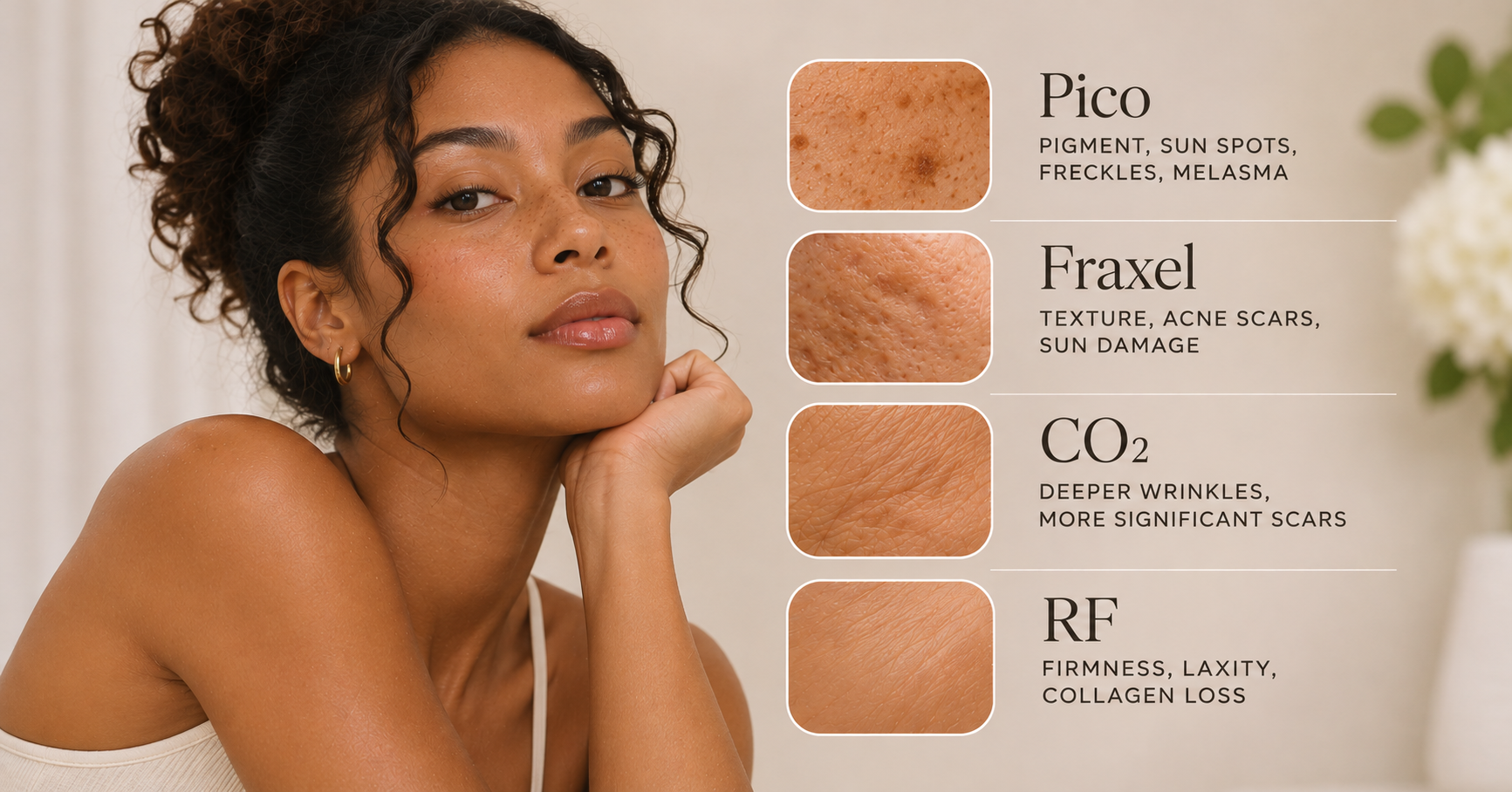
The short answer: the best device is the one that matches your main concern, your skin tone and how much downtime you can accept. Pico targets pigment, Fraxel improves texture and sun damage, CO2 resurfaces more deeply, and radiofrequency tightens. Many people need more than one, in sequence.
Start with the problem, not the device
People often ask for a laser by name. I start with what you want to change and why. Then I look at your skin: your tone, your pigment, your texture, your history of scarring or darkening, and your calendar. I use 3D VISIA imaging to see sun damage and pigment beneath the surface, so that the plan is based on what is actually there.
The four tools in plain language
| Tool | What it does | Best for | Typical downtime |
|---|---|---|---|
|
Pico laser |
Shatters pigment with very short pulses and limited heat |
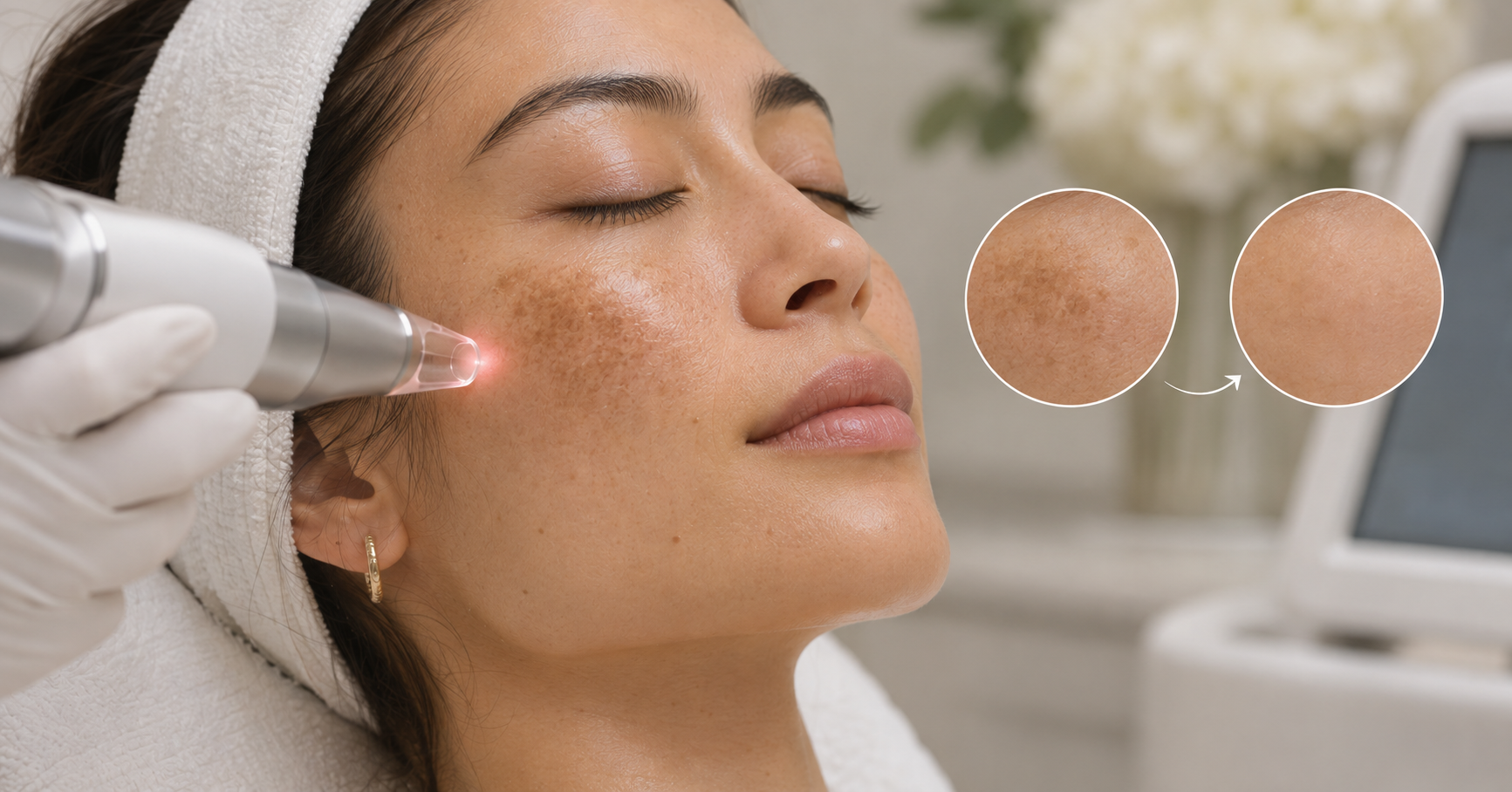
Sun spots, freckles, melasma (in selected cases), uneven tone |
Little to a few days |
|
Fraxel Dual (1550 nm and 1927 nm) |
Fractional treatment, with a deeper and a surface wavelength |
Texture, mild to moderate scars, sun damage, tone |
About a week of redness and flaking |
|
CO2 laser |
Fractional ablative resurfacing that removes tiny columns of skin |
Deeper wrinkles, more significant scars, advanced sun damage |
One to two weeks of visible healing |
|
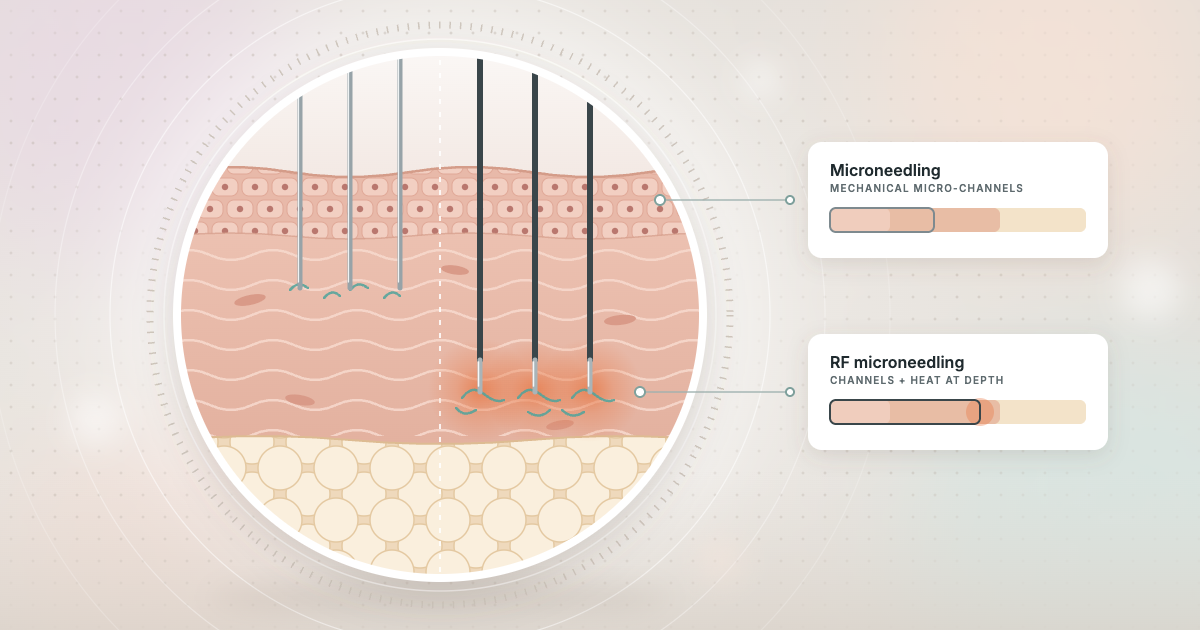
Radiofrequency (Everesse) |
Heats deeper tissue without resurfacing |
Early to moderate laxity, collagen loss |
Minimal |
Which should I pick? By concern
|
Your main concern |
Where I usually start |
Column 3 |
|---|---|---|
|
Brown spots and freckles |
Pico |
Targets pigment with little heat |
|
Melasma |
Pico (carefully), plus sunscreen and topicals |
Heat can worsen melasma |
|
Sun damage and rough texture |
Fraxel Dual |
Treats surface and deeper layers |
|
Acne scars |
Fraxel 1550 nm, or CO2 for more significant scarring |
Depends on scar depth |
|
Fine lines |
Fraxel; CO2 for deeper lines |
Collagen remodeling |
|
Early sagging or crepiness |
Radiofrequency |
Tightens without resurfacing |
|
Facial redness and broken vessels |
Pulsed dye laser |
Targets blood vessels; see Pulsed Dye Laser for Redness |
|
Dull skin overall |
Fraxel or pico at lower settings, plus skincare |
Improves tone and glow |
Why skin tone changes the plan
Medium to deep skin tones can darken after heat or inflammation, a problem called post-inflammatory hyperpigmentation. That does not mean laser is off the table. It means I choose conservative settings, treat in stages, and use pigment-sparing options first. Pico is often a gentle starting point for these skin tones. The more aggressive the resurfacing, the more important it is that your skin is well prepared and not tanned.
How I sequence treatments
Many patients benefit from more than one tool. A sensible order might be:
- Fix the biggest structural issue first. For example, resurfacing for scars, or radiofrequency for laxity.
- Clear pigment. Pico can refine tone once inflammation has settled.
- Maintain. A lighter treatment once or twice a year, plus daily sunscreen and a retinoid.
I avoid stacking aggressive treatments close together. Healing time is part of the plan.
How to think about downtime
If you can take a week or two away from social events, deeper resurfacing becomes possible. If you cannot, gentler treatments in a series can get you most of the way with less disruption. Neither is wrong. Be honest about your calendar, because a good plan fits your life.
What no laser can do
- Replace volume lost with age or weight loss; that needs filler or biostimulators.
- Tighten large amounts of loose skin; that may need surgery.
- Cure melasma.
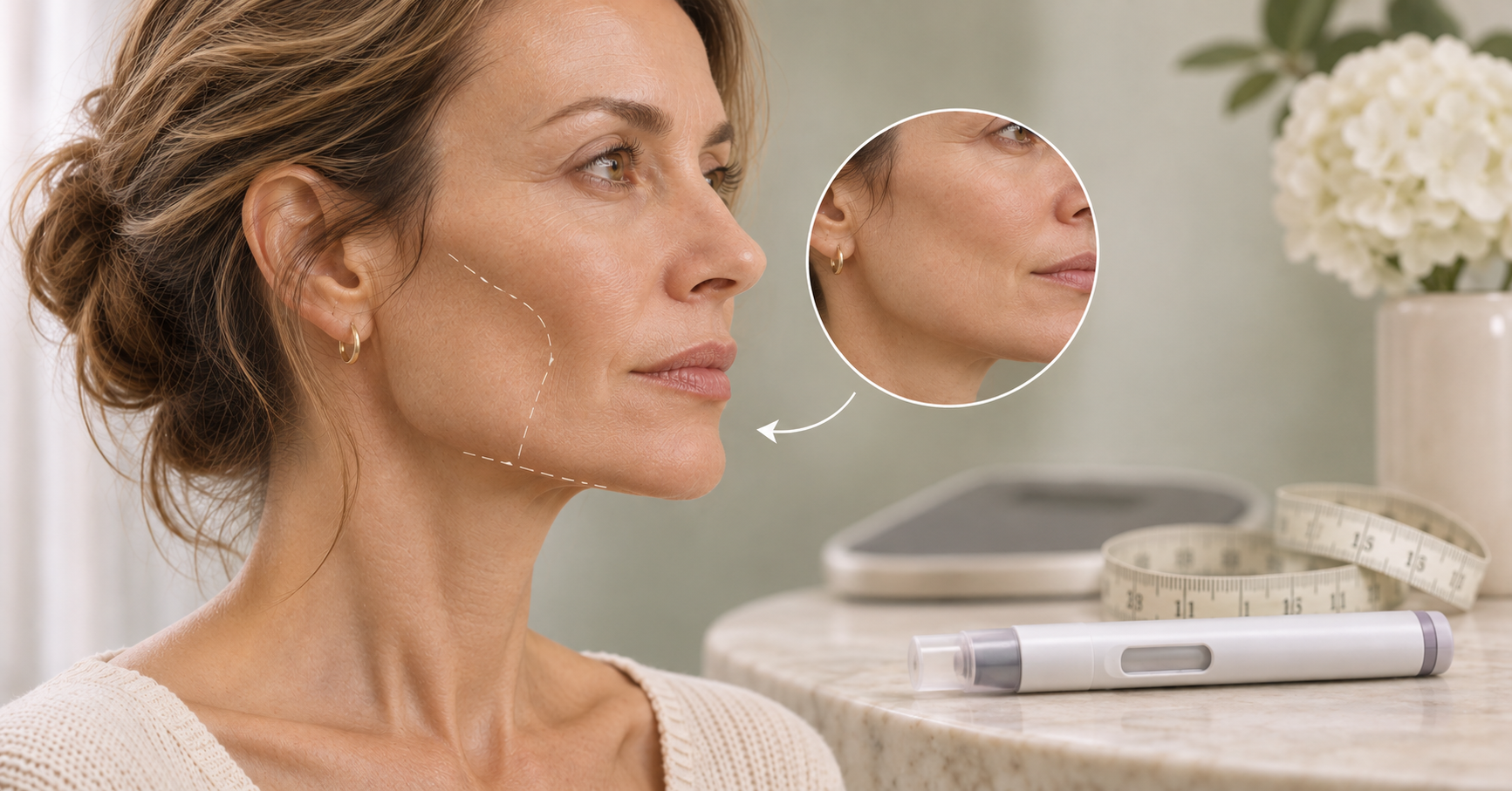
If you are dealing with volume loss from weight change, read Ozempic Face.
Questions to ask before any laser treatment
- Who will perform it, and are they a physician?
- Will you examine my skin and any suspicious spots first?
- What is the plan if I have a darkening or healing problem?
- What will recovery realistically look like?
Frequently asked questions
Is Fraxel or CO2 better? Neither is better in general. Fraxel offers less downtime and works well in a series. CO2 gives a stronger result in one treatment but needs longer healing.
Is pico better than Fraxel? They do different things. Pico is for pigment; Fraxel is for texture and sun damage.
Can I combine lasers? Yes, in a planned sequence, not on the same day unless I have chosen to.
Which is safest for dark skin? There is no single safest device. Conservative settings and an experienced physician matter more than the machine.
Do I need a consultation first? Yes. A consultation lets me examine your skin, check spots, and set realistic expectations.
Not sure which one fits? Book a consultation with Dr. Yoo and I will map it out with you.





Leave A Comment