Visible Light Photoprotection: What the New Science Says, and Which Sunscreens Actually Block It
Beyond UV: The Visible Light Problem
For most of the history of sunscreen science, photoprotection meant UV protection.
UVB radiation, which spans approximately 280 to 320 nm, is most associated with sunburn. UVA radiation, which spans approximately 320 to 400 nm, penetrates more deeply into the skin and contributes to photoaging, pigmentation, immune suppression, and skin cancer risk.
SPF labels primarily reflect UVB protection. Broad-spectrum labeling addresses UVA protection.
But in recent years, a growing body of research has focused on another part of the solar spectrum: visible light.
Visible light spans wavelengths from approximately 400 to 700 nm. This is the part of the electromagnetic spectrum that the human eye can see. At shorter visible wavelengths, around 400 to 450 nm, we are in the high-energy visible, or HEV, range. This is sometimes called blue light.
The key clinical point is this: visible light can contribute to pigmentation, especially in patients with darker skin tones and patients with melasma or post-inflammatory hyperpigmentation.
What Does Visible Light Actually Do to Skin?
The effects of visible light on skin are different from UV radiation, but they are clinically meaningful. Here is what the evidence shows.
Hyperpigmentation and Melasma
This is where the clinical significance of visible light protection is most established.
Visible light can trigger melanogenesis, or melanin production, in individuals with darker skin types. This matters because melanin is what drives hyperpigmentation, melasma, and post-inflammatory dark marks.
A landmark study in the Journal of Investigative Dermatology found that visible light exposure induced darker and more sustained pigmentation than UVA1 exposure in Fitzpatrick skin types IV to VI. This finding changed how dermatologists think about pigmentation and sunscreen.
For patients with melasma, this is especially important. Melasma is not only triggered by UV radiation. It can also be worsened by visible light, particularly in darker skin tones.
This is why some patients say, “I wear SPF every day, but my melasma still gets worse.” Often, the issue is not that they are doing nothing. It is that their sunscreen may be protecting against UV radiation but not visible light.
Reactive Oxygen Species and Oxidative Stress
Visible light can also contribute to oxidative stress in the skin. Like UV radiation, visible light can generate reactive oxygen species, or ROS. These unstable molecules contribute to inflammation, collagen degradation, and photoaging pathways.
The mechanisms are not identical to UV damage. UV radiation can directly damage DNA, while visible light appears to act more through chromophores and oxidative pathways. But the downstream effect can still be relevant: inflammation, pigmentation, and cumulative skin stress.
This is one reason antioxidants may be helpful as part of a photoprotection routine. They do not replace sunscreen, but they can support the skin against oxidative stress.
Visible Light, Melasma, and Indoor Exposure
Sunlight is the most important visible light exposure for most people. Visible light passes through clear windows more easily than UVB, and patients with melasma may notice flares after time near bright windows, in cars, or outdoors even when they are not burning.
Indoor light and device screens are a more nuanced topic. The amount of visible light from phones, computers, and typical indoor lighting is generally much lower than sunlight. For most people, screens are not the main driver of pigmentation.
However, for patients with severe melasma or highly light-sensitive pigmentation, it can be reasonable to reduce unnecessary high-intensity visible light exposure and use a visible-light-protective sunscreen daily.
The most important step is still the same: tinted sunscreen with iron oxides.
What Actually Blocks Visible Light?
This is the part of the visible light conversation that matters most clinically. Untinted UV filters are designed to protect against ultraviolet radiation, not visible light. This includes many chemical filters, such as avobenzone, octinoxate, octisalate, octocrylene, and bemotrizinol. These filters do not meaningfully absorb across the visible light range.
Mineral filters like zinc oxide and titanium dioxide are excellent UV filters, but untinted mineral sunscreens also provide limited visible light protection unless they contain pigmentary ingredients.
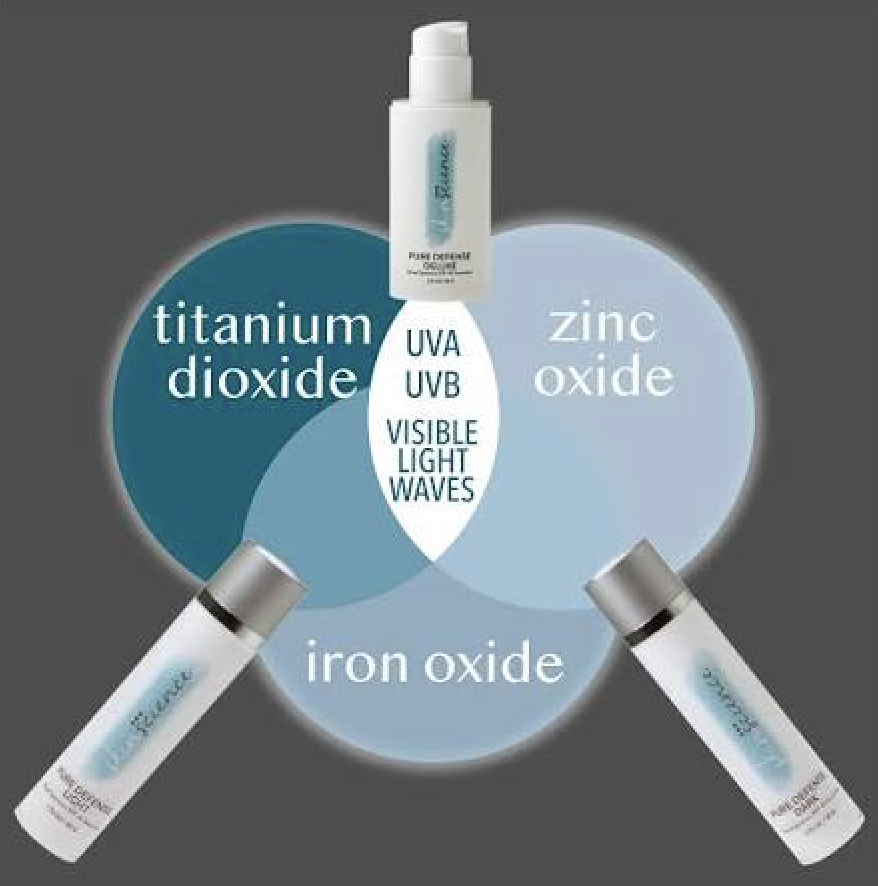
The ingredients that provide meaningful visible light protection are pigments, especially iron oxides. Manganese dioxide and pigmentary titanium dioxide may also contribute in some formulas.
Tinted sunscreens contain iron oxides to create color, reduce white cast, and match skin tone. That tint is not just cosmetic. It can be functional photoprotection.
Why Iron Oxides Matter
Iron oxides are pigments commonly used in tinted sunscreens, foundations, concealers, and cosmetic products. They help protect against visible light by absorbing and scattering wavelengths in the visible spectrum. This is especially useful in the blue-violet range that can trigger pigmentation in darker skin types.
Clinical studies have shown that broad-spectrum sunscreen with iron oxides can improve melasma outcomes more than UV-only broad-spectrum sunscreen of the same SPF. Another randomized study found that sunscreen protecting against UV and short visible wavelengths helped reduce melasma relapse compared with UV-only sunscreen.
This is the foundation of the recommendation I make to many melasma patients: use a tinted sunscreen with iron oxides, not just a clear sunscreen, regardless of how high the SPF is.
The tint is not just makeup. It is part of the treatment plan.
Who Needs Visible Light Protection Most?
Visible light protection is most important for patients who are prone to pigmentation.
This includes patients with:
- Melasma
- Post-inflammatory hyperpigmentation
- Fitzpatrick skin types III to VI
- Dark marks after acne or eczema
- Pigment flares after procedures
- History of stubborn sun-induced discoloration
For patients with very fair skin and no pigmentation concerns, visible light protection may be less critical than UV protection. But for patients with melasma or skin of color, it can make a meaningful difference.
How to Choose a Visible Light-Protective Sunscreen
Look for a sunscreen that checks several boxes. First, choose broad-spectrum SPF 30 or higher. For melasma, pigmentation, and daily facial use, I often prefer SPF 50.
Second, choose a tinted formula. The tint should come from iron oxides or pigmentary ingredients.
Third, make sure you like the texture and shade. If the product does not match your skin tone, you will not use enough of it. Shade range matters, especially for deeper skin tones.
Fourth, consider the finish. Some patients prefer matte formulas, while others prefer hydrating or dewy formulas. The best option is the one you will wear consistently.
Fifth, for sensitive skin, look for fragrance-free options and avoid formulas that sting, burn, or trigger redness.
Practical Guidance: Building Visible Light Protection Into Your Routine
If you have melasma, post-inflammatory hyperpigmentation, or Fitzpatrick skin type III or above, your daily photoprotection routine should be more than SPF alone.
Use a tinted broad-spectrum SPF 30 or higher every morning. For many pigmentation-prone patients, SPF 50 is preferred.
Apply enough product. Most people under-apply sunscreen, which means they get less protection than the label suggests.
Reapply every 2 hours during outdoor exposure, sweating, or prolonged sun exposure.
Use hats, sunglasses, shade, and window awareness as part of your strategy.
Consider antioxidants under sunscreen, such as vitamin C, niacinamide, or other antioxidant serums, if your skin tolerates them.
If you spend long periods near bright windows or outdoors, prioritize tinted sunscreen even on days when you are not planning to be “in the sun.”
Does Makeup Count as Visible Light Protection?
Makeup can help, but it depends on the product and how much you apply.
Foundations and concealers often contain iron oxides, which may provide some visible light protection. However, most people do not apply makeup evenly or thickly enough to rely on it as their only photoprotection.
For melasma patients, I prefer a tinted sunscreen as the base layer. Makeup can be layered on top if desired. Think of makeup as a helpful addition, not a replacement for sunscreen.
What About Blue Light From Screens?
Blue light from screens is a popular topic, but it needs perspective. The visible light exposure from sunlight is dramatically higher than what most people receive from phones, tablets, and computers. For most patients, the priority should be outdoor sun exposure, window exposure, and consistent sunscreen use.
If a patient has severe melasma and notices flares despite excellent outdoor protection, we can discuss screen brightness, night-shift settings, and limiting prolonged close-range exposure. But I do not want patients to panic about their phone while forgetting to reapply sunscreen outdoors.
The Bottom Line
Visible light is an important part of modern photoprotection, especially for melasma, post-inflammatory hyperpigmentation, and skin of color.
Conventional untinted sunscreens can protect well against UV radiation, but they do not necessarily protect against visible light. For visible light protection, the key ingredients are pigments, especially iron oxides.
That is why tinted sunscreens matter. If you are pigmentation-prone, the best sunscreen is often not just broad-spectrum. It is broad-spectrum, tinted, iron oxide-containing, cosmetically wearable, and used every day.
FAQ
Q: What is visible light?
A: Visible light is the part of the electromagnetic spectrum humans can see, ranging from about 400 to 700 nm. It includes blue, green, yellow, orange, and red light.
Q: Does visible light damage skin?
A: Visible light can contribute to pigmentation and oxidative stress, especially in darker skin types and patients with melasma or post-inflammatory hyperpigmentation.
Q: What is blue light?
A: Blue light is a shorter wavelength portion of visible light, often around 400 to 450 nm. It is also called high-energy visible light, or HEV light.
Q: Do regular sunscreens block visible light?
A: Most untinted sunscreens are designed to protect against UV radiation, not visible light. Tinted formulas with iron oxides offer better visible light protection.
Q: What ingredients block visible light?
A: Iron oxides are the most important ingredients for visible light protection in topical sunscreen products. Manganese dioxide and pigmentary titanium dioxide may also contribute in some formulas.
Q: Is tinted sunscreen better for melasma?
A: For many melasma patients, yes. Tinted sunscreens with iron oxides can help protect against visible light, which can worsen melasma, especially in darker skin tones.
Q: Does makeup protect against visible light?
A: Makeup containing iron oxides may provide some visible light protection, but it should not replace sunscreen. A tinted sunscreen is a better base layer for daily photoprotection.
Q: Should I worry about blue light from my phone?
A: For most people, sunlight is a much larger source of visible light than phone or computer screens. If you have severe melasma, reducing screen brightness may be reasonable, but sunscreen and outdoor protection matter much more.