Fear of Overfilling: What Patients Want From Injectables in 2026
Something Shifted in the Exam Room
Over the last few years, I have noticed a distinct change in what patients are asking for during cosmetic consultations.
Where patients used to come in asking for more volume, more lift, or more correction, many are now coming in asking for less. Some are asking for reversal. Others are showing photos of celebrities and influencers and saying, “I do not want to look overdone.”
The era of obvious, maximalist filler, with dramatic cheeks, exaggerated lips, and the smooth-everywhere look of the mid-2010s, has given way to something more restrained. Call it injectable minimalism. Call it fear of overfilling. Call it a return to facial harmony.
Whatever you call it, it is one of the most important cosmetic dermatology trends of 2026, and it is changing how patients think about injectables.
What “Overfilled” Actually Looks Like
To understand the reaction against overfilling, it helps to understand what overfilling can do.
When too much hyaluronic acid filler is placed in the face, either in a single session or slowly accumulated over years, the face can lose its natural proportions. This is sometimes called “pillow face,” although I prefer to describe the actual changes more specifically.
Overfilling can create excessive cheek fullness, heaviness in the midface, puffiness under the eyes, an overly round appearance, lips that no longer match the rest of the face, or a loss of natural facial shadows and contours.
The issue is not filler itself. Filler can be beautiful, subtle, and restorative when used carefully. The issue is too much filler, poorly placed filler, or repeated filler without reassessment.
Some patients have accumulated filler over many years without ever fully dissolving or taking time to reassess the face. Hyaluronic acid fillers are labeled as temporary, but they can persist in tissue longer than many patients realize. MRI studies have shown that HA filler can remain detectable for years, particularly in areas like the midface.
This does not mean every patient needs to dissolve old filler. It does mean that we should stop thinking of filler as something that always disappears completely on a predictable timeline.
The Role of Social Media
The same platforms that helped drive the filler boom have also made patients more aware of what overfilling can look like over time. Patients now come in with screenshots, old celebrity photos, influencer videos, and before-and-after images. They are not just looking at the two-week post-treatment result. They are looking at what happens after years of repeated treatment.
Many patients are more educated than ever. They know the words “migration,” “dissolving,” “hyaluronidase,” and “facial balancing.” They are asking more thoughtful questions, which is a good thing.
What Patients Are Asking For Now
The requests I hear most often in 2026 are:
“I want to look like myself, just refreshed.”
“I do not want people to know I had anything done.”
“Can you fix what someone else put in?”
“I think I have too much filler.”
“I have been reading about hyaluronidase.”
Hyaluronidase has become one of the most discussed words in aesthetic dermatology. Patients are not only asking for filler. They are asking whether filler should be dissolved, reduced, or rebalanced.
That is a very different conversation than the one we were having 10 years ago.
Hyaluronidase: The Dissolving Enzyme
Hyaluronidase is an enzyme that breaks down hyaluronic acid, which is the primary ingredient in most soft tissue fillers. It has been used in medicine for decades, originally to help with the absorption and spread of injected medications and fluids. In cosmetic dermatology and plastic surgery, hyaluronidase is used to dissolve misplaced, excessive, migrated, or unwanted HA filler.
What is newer is the number of patients seeking elective dissolving. Not because there is an emergency. Not because something necessarily went wrong. But because they want to start over with less.
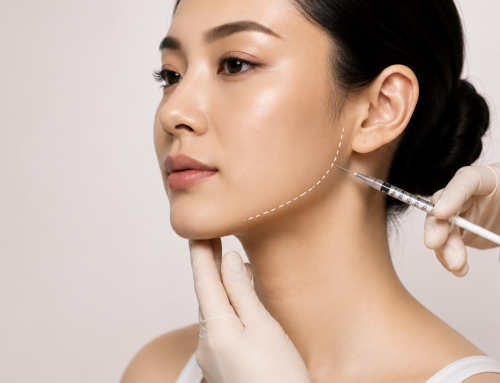
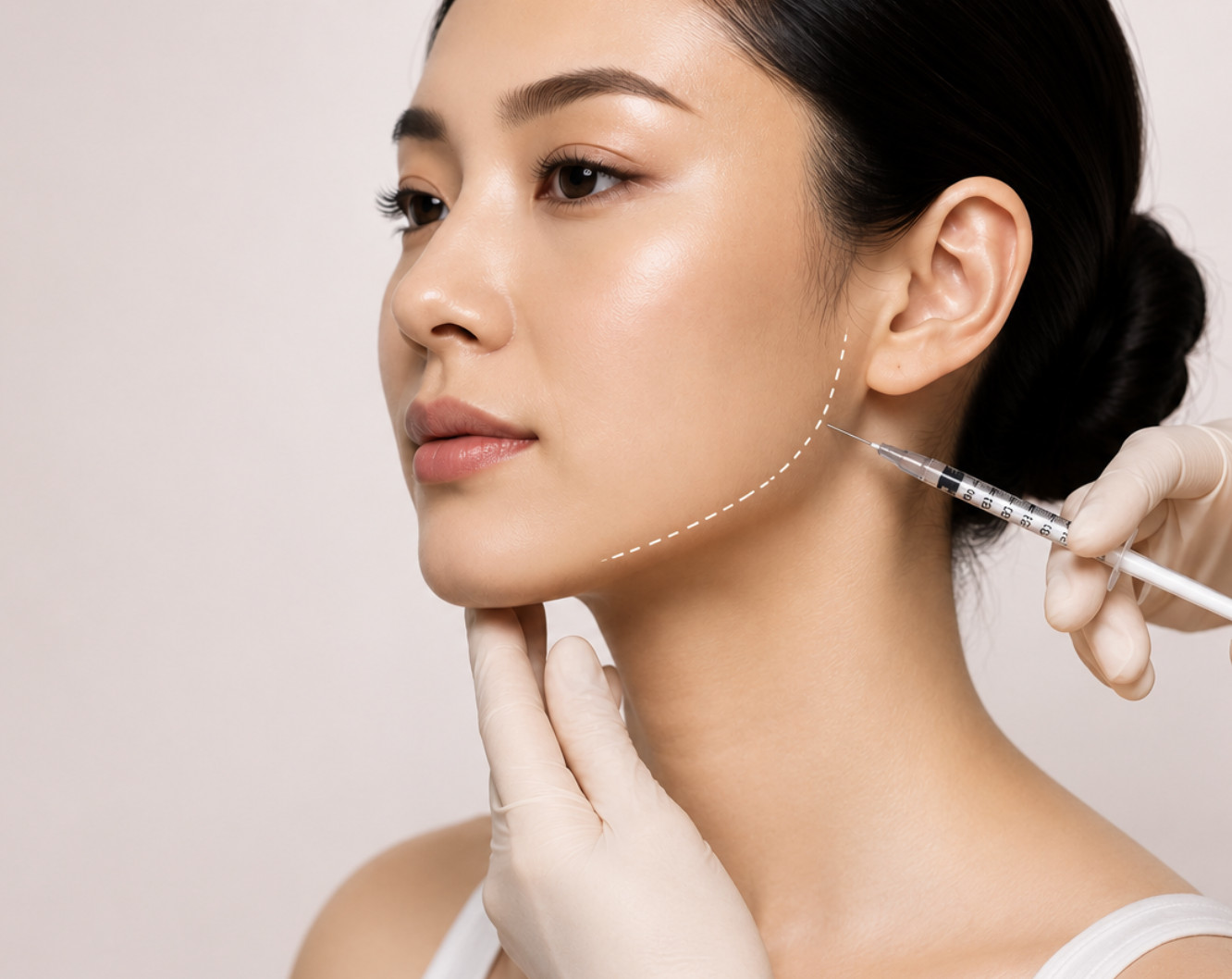
The procedure involves injecting small amounts of hyaluronidase into areas where HA filler is present. It can work quickly, and many patients see a noticeable reduction within 24 to 48 hours. The effect may continue to evolve over the following days to weeks.
Multiple sessions may be needed, especially when filler has been present for years, when large volumes were used, or when the anatomy is complex.
What Patients Should Know Before Dissolving Filler
Dissolving filler can be very helpful, but it is not always emotionally or cosmetically simple.
If filler has been present for years, the face may have adapted to that volume. The skin may have stretched. The surrounding tissue may have changed. The patient may also have aged naturally during the time the filler was present.
When filler is removed, the face may temporarily look more hollow, loose, or tired than expected. Sometimes this is not because hyaluronidase damaged the face. It is because the filler was masking underlying volume loss, aging, or tissue laxity.
Some clinicians and patients describe this transition period as posthyaluronidase syndrome, although this is not a formal medical diagnosis. I think of it more as a post-dissolving adjustment period.
This period can be distressing if patients are not prepared for it.
The Post-Dissolving Adjustment Period
After dissolving, especially after dissolving large amounts of accumulated filler, some patients may feel that they look worse before they look better.
There may be temporary deflation, swelling, unevenness, looseness, or a sense that the face looks unfamiliar. The tissue often needs time to settle.
I counsel patients very clearly: after dissolving filler, there may be a 4 to 8 week period where the face is adjusting. This does not mean the final result is visible immediately. It also does not mean that more filler should be placed right away.
Once the tissue settles, we can reassess. Sometimes the best next step is no filler. Sometimes it is a small amount of strategically placed filler. Sometimes it is a biostimulator, skin tightening, or simply time.
The goal is not to erase every sign of aging. The goal is to restore balance.
What Natural Filler Results Look Like in 2026
The hallmark of modern filler aesthetics is restored proportion and structure, not obvious volume. The goal is to replace what time has changed, such as deflated fat compartments, flattened temples, or subtle lip thinning, in amounts that are proportionate to the individual face.
Natural filler should maintain movement, expression, and identity. A patient should still look like themselves when they smile, talk, laugh, and live.
In my practice, I increasingly use a “less is more” philosophy. This means smaller volumes per session, staged treatments over time, and regular reassessment rather than cumulative adding.
It also means saying no when filler is not the right answer.
Sometimes the face does not need more volume. Sometimes it needs better skin quality, collagen stimulation, resurfacing, tightening, or simply a more strategic plan.
Filler Is Not the Whole Anti-Aging Plan
One reason patients become overfilled is that filler gets used to solve every problem. But not every concern is a volume problem.
Crepey skin, sun damage, rough texture, enlarged pores, laxity, pigmentation, and collagen loss cannot be fixed with filler alone. In some cases, adding more filler to a skin-quality problem can make the face look heavier or puffier instead of younger.
That is why I often combine injectables with treatments that improve the skin itself. This may include retinoids, sunscreen, lasers, radiofrequency, microneedling, biostimulators, or other collagen-supporting treatments.
A natural result usually comes from treating the right layer of the face with the right tool.
My Approach to Injectables in 2026
My approach is conservative, anatomical, and individualized.
First, I assess the face at rest and in motion. Then I look at proportion, volume, skin quality, prior filler, asymmetry, and the patient’s actual goal.
If filler is appropriate, I use the smallest amount needed to create a meaningful improvement. If the patient already has too much filler, we discuss dissolving or staged correction. If the concern is skin laxity or texture, I do not pretend filler will solve it.
Patients are happiest when the result feels familiar. They do not want to look transformed. They want to look rested, balanced, and like themselves on a good day.
The Bottom Line
Fear of overfilling is not really a fear of injectables. It is a fear of losing facial identity.
Patients still want cosmetic treatments. They still want to look refreshed. But they are more cautious, more informed, and more interested in subtle, long-term results.
Hyaluronic acid filler can be an excellent tool when used thoughtfully. Hyaluronidase can also be an excellent tool when filler needs to be reduced or reversed. The key is choosing the right treatment, in the right amount, at the right time. In 2026, the best injectable work is not about looking filled. It is about looking balanced.
FAQ
Q: What does overfilled mean?
A: Overfilled usually refers to a face that has too much filler, poorly placed filler, or accumulated filler over time. It can cause puffiness, heaviness, distorted proportions, or loss of natural facial contours.
Q: Can filler really last for years?
A: Yes. Although HA fillers are often described as temporary, imaging studies have shown that filler can remain detectable for years in some patients, especially in the midface.
Q: What is hyaluronidase?
A: Hyaluronidase is an enzyme used to dissolve hyaluronic acid filler. It can be used for misplaced filler, migrated filler, excessive filler, or cosmetic reversal.
Q: Does dissolving filler damage your face?
A: Hyaluronidase is used safely by trained physicians, but the transition after dissolving can be emotionally and cosmetically challenging. Sometimes the face looks temporarily hollow or loose because the filler was masking aging or volume loss.
Q: How long should I wait after dissolving filler before adding more?
A: Many patients benefit from waiting at least 4 to 8 weeks before reassessment, depending on the area treated and how much filler was dissolved.
Q: What does natural filler look like?
A: Natural filler restores proportion, support, and balance without making the face look puffy or overdone. The goal is to look refreshed, not different.
Q: How do I avoid looking overfilled?
A: Choose an experienced injector, avoid chasing every line with filler, start conservatively, reassess before adding more, and treat skin quality and collagen loss instead of relying only on volume.
Updated June 2026