
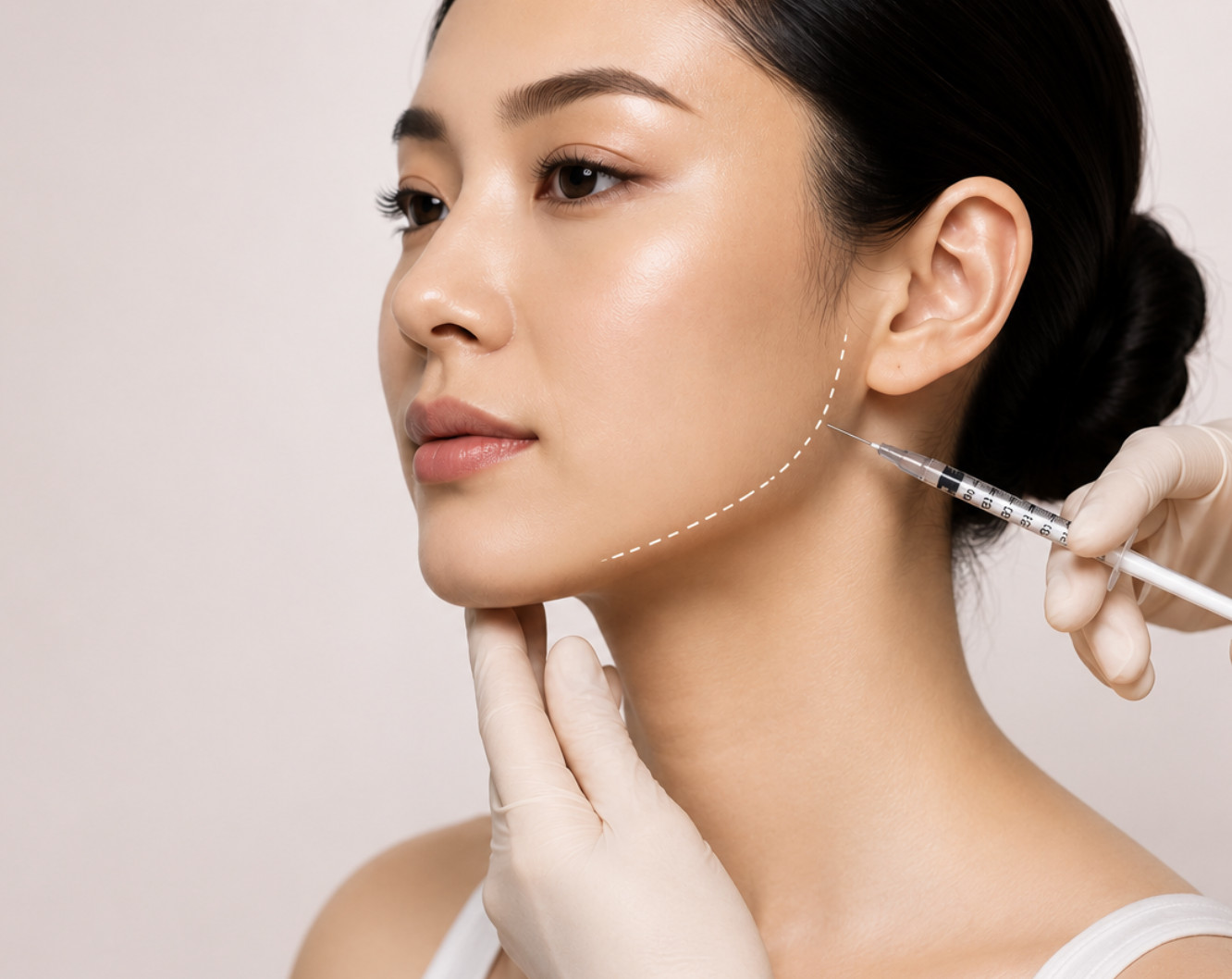
Ultrasound skin tightening covers more ground than most patients realize. “HIFU” isn’t one treatment, it’s a category, and the two devices patients ask about most, Sofwave and Ultraformer MPT, work at genuinely different depths for genuinely different goals.
How Does Ultrasound Skin Tightening Work?
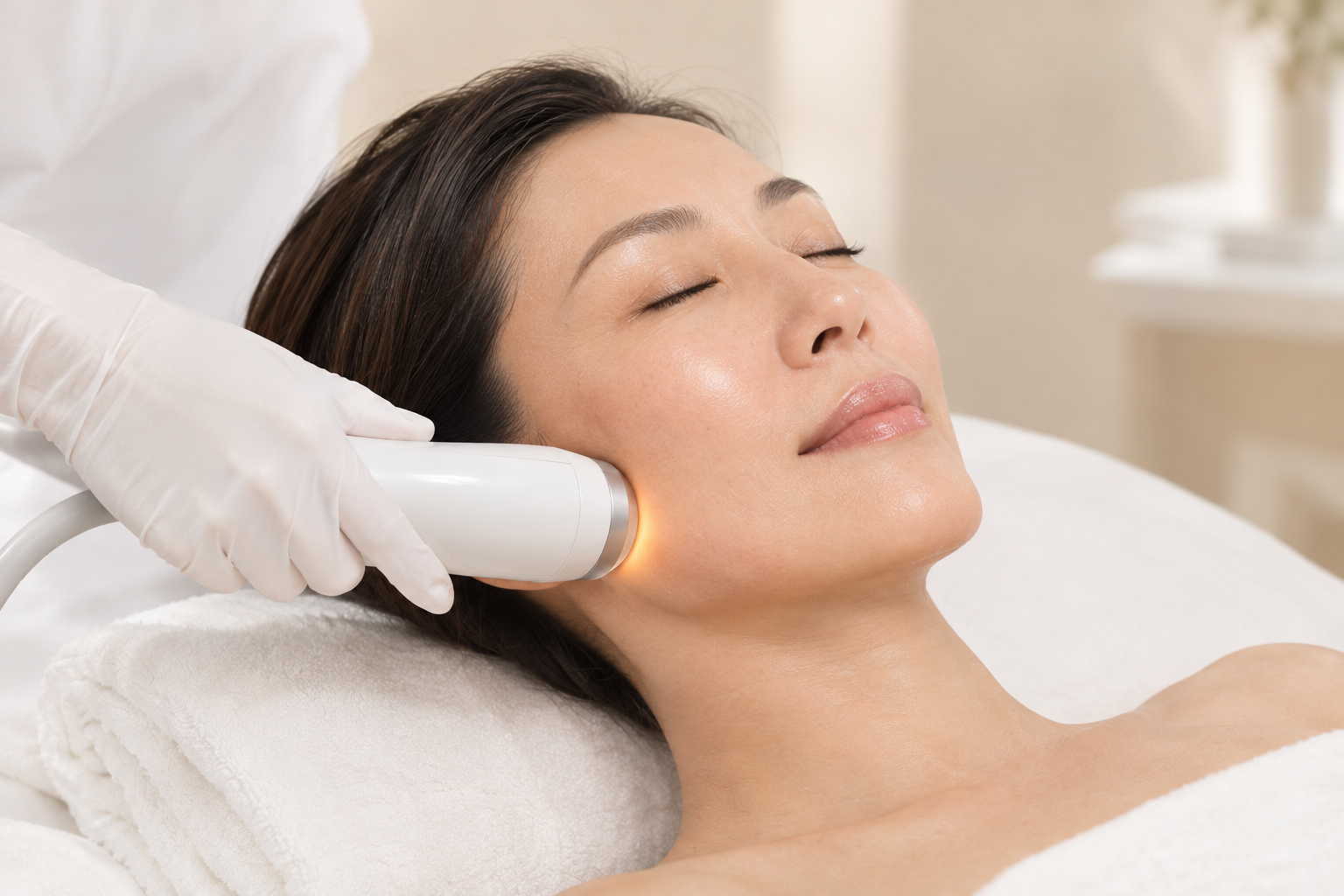
Both devices use ultrasound energy to heat tissue at a controlled depth. As the tissue heals over the following months, that heat triggers new collagen and elastin production.
The key variable between devices is depth, and depth determines what each one is actually good at.
What Is Sofwave?
Sofwave uses proprietary SUPERB (Synchronous Ultrasound Parallel Beam) technology. It delivers energy to a precise, shallow target about 1.5 mm into the mid-dermis, the layer where collagen production is most active.
That shallow, controlled depth, along with built-in cooling to protect the surface, is why Sofwave tends to be more comfortable than deeper ultrasound treatments.
Because it stays in the mid-dermis, Sofwave is best suited to fine lines, mild to moderate laxity, and overall texture refinement, not structural lifting.
What Is Ultraformer MPT?
Ultraformer MPT, made by Classys and sold in Korea as Shurink, works across a much wider depth range: from about 1.5 mm to 6.0 mm, depending on the cartridge selected.
That deeper reach into the structural layers of the face is what allows it to address more significant laxity and provide a more foundational lifting effect, rather than surface refinement alone.
Which One Fits Which Goal?
- Sofwave: a better fit for texture, fine lines, and early laxity, with a gentler treatment experience.
- Ultraformer MPT: a better fit for more noticeable sagging, where a deeper structural effect matters more than surface polish.
This piece is an educational comparison so patients understand the category before they walk into a consultation.
If you’re deciding between ultrasound and radiofrequency rather than between these two devices, see [Link: Everesse vs. XERF post]. I keep these separated by technology rather than mixing ultrasound and RF into one comparison, since the mechanisms aren’t directly equivalent.
FAQ
Is this the same as Ultherapy?
No. Ultherapy is a separate micro-focused ultrasound device with built-in visualization, reaching depths up to 4.5 mm. That puts it closer in range to Ultraformer than to Sofwave, but it’s a distinct system from both.
How does recovery compare to RF?
Generally similar: low downtime and some temporary redness, with results developing gradually over two to three months as collagen remodels.



Leave A Comment