
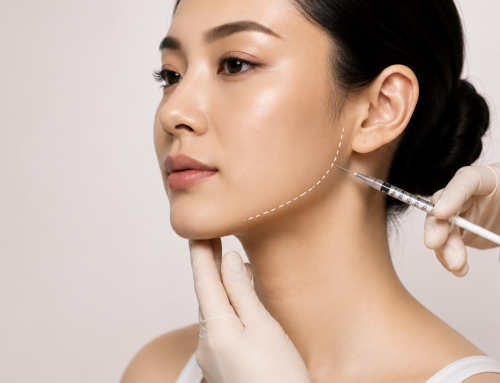
Kybella (deoxycholic acid) has been one of the few injectable options for reducing fat under the chin since its approval in 2015. In practice, it has also been used off-label to target fat in other areas of the face and body.
The FDA is now taking a closer look at what happens when it is.
In September, the agency announced a label update for Kybella citing newly identified risks, including injection site nodules and masses that may not resolve on their own, along with vision changes, facial weakness, and numbness when the drug is used outside the chin.
What Is Kybella?
Kybella is an injectable form of deoxycholic acid, a molecule the body naturally produces to help break down dietary fat. When injected into fat, it disrupts fat cell membranes and permanently destroys those cells.
The catch is that deoxycholic acid is not selective for fat. If it reaches nearby nerves, blood vessels, or skin, it can damage those tissues as well. That is why placement and anatomy matter so much with this treatment.
Kybella is manufactured by Allergan Aesthetics, an AbbVie company, and is FDA-approved only for the submental area, the fullness beneath the chin.
What Did the FDA Find?
The FDA reviewed its Adverse Event Monitoring System along with the published medical literature.
It identified 129 cases of adverse events when Kybella was injected outside the chin area. These included blurred or reduced vision when injected around the eyes, facial weakness (paresis), and numbness or tingling (paresthesia).
The agency also found 117 cases of unresolved nodules or masses. Nodules measured 3 cm or smaller, masses were larger than 3 cm, and on average they had been present for about five months.
Why the Nodule Update Matters
Nodules are not a new side effect. In the original clinical trials, about 13% of patients developed them.
What has changed is the language. The updated label now acknowledges that some nodules and masses may not resolve and may require medical intervention. A lump that fades on its own over a few weeks is a very different experience from one that persists and needs treatment.
The FDA has also restated, in the Warnings and Precautions section, that Kybella should not be used outside the submental area. This was always on the label, but it is now emphasized more directly.
Risks Known Since Approval
Some of these concerns date back to Kybella’s approval. During the 2015 FDA advisory committee meeting, regulators raised concerns about injury to the marginal mandibular nerve, which controls movement of the lower lip. It occurred in 4% of patients receiving Kybella compared with 1% on placebo. These injuries resolved on their own, but some lasted as long as 298 days.
A 2024 paper in Aesthetic Surgery Journal Open Forum also described uncommon but serious complications reported in real-world use, including hematoma, hair loss at the injection site, vascular injury, skin ulceration and necrosis, abscess, and accidental injection into an artery. The authors noted that many of these events may be preventable. AbbVie supported medical writing for that paper, and one author has advisory and consulting ties to the company.
What Could Change for Patients?
For most patients, Kybella under the chin remains a reasonable option when performed by an experienced injector. The update does not remove the treatment from the market.
What it does is draw a clearer line around off-label use. Treating areas such as the jowls or the skin around the eyes carries risks that were not studied in the original trials, and the FDA’s review suggests those risks are real.
The FDA is urging clinicians to review the prescribing information before treatment and to counsel patients to seek care for signs of nerve weakness (such as an uneven smile), difficulty swallowing, or serious injection site reactions. A persistent lump after treatment is also worth having evaluated rather than waiting it out.
Ultimately, this update is a reminder that fat-dissolving injections are a medical treatment, and results depend heavily on careful patient selection and a detailed understanding of facial anatomy.
–
References: FDA Amps Up Warning on Kybella Adverse Effects










Leave A Comment